
Fridge, freezer and hot holding temperatures: the legal limits for UK food businesses
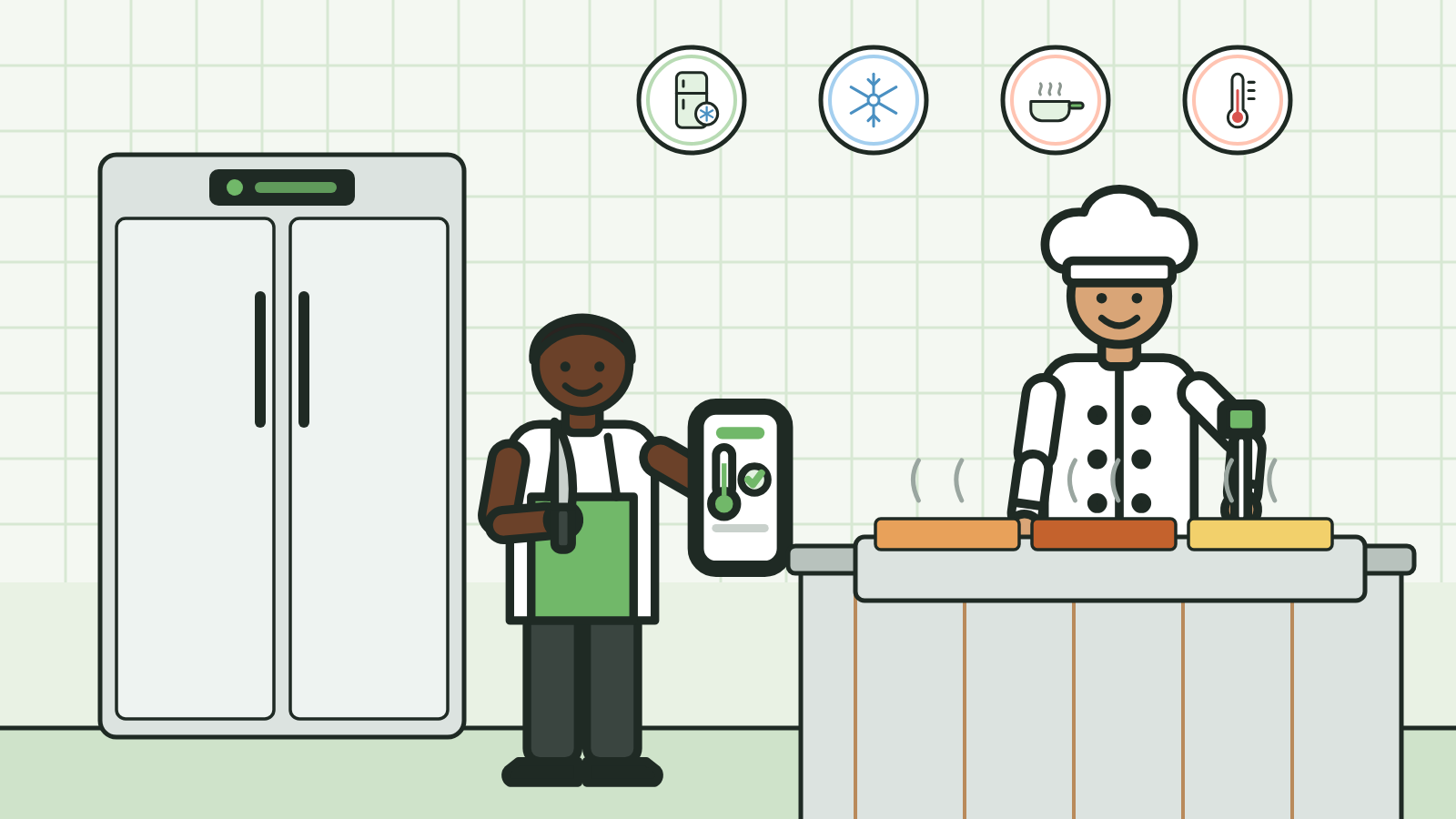
In England and Wales the law says chilled food must be kept at 8°C or below, and hot food kept for service at 63°C or above. The FSA recommends setting fridges to 5°C or below so the food stays under 8°C, and keeping frozen food at -18°C or below, but those two are guidance, not law.
Scotland works differently, so everything below is for England and Wales.
The legal fridge temperature: 8°C
The limit is in Schedule 4 of the Food Safety and Hygiene (England) Regulations 2013, with the same wording in the Food Hygiene (Wales) Regulations 2006. Keeping food "at a temperature above 8 °C" is an offence if the food is likely to support the growth of harmful bacteria and you're running a business with it.
That covers most of what's in a kitchen fridge: cooked dishes, anything with a use-by date, dairy, prepared salads and desserts. The FSA's chilling guidance lists those as foods that need to be kept chilled.
A few things sit outside the rule, such as food that's safe at room temperature for its whole shelf life, sealed tins until they're opened, and raw food that's going to be cooked properly before anyone eats it.
Why fridges get set to 5°C
The FSA's advice is to set your fridge to 5°C or below "to make sure food stays cold enough, even if the temperature changes". A 5°C setting leaves room for the door being opened during service.
When food can be above 8°C
The law gives a defence for chilled food on display or kept for service for less than four hours, as long as it hadn't been out like that before. The FSA puts it plainly: you can keep chilled food out of the fridge for up to 4 hours, then you must throw it away. If it's been out less than 4 hours it can go back in the fridge (GOV.UK).
There's also a defence for short, unavoidable rises, such as moving stock off a delivery van, the fridge going through a defrost cycle, or a breakdown, so long as the time above 8°C was limited and "consistent with food safety". It isn't a way round a fridge that runs warm every afternoon.
Freezer temperature: -18°C is guidance
The temperature schedule in these regulations doesn't set a freezer figure. The FSA's Safer food, better business pack says "Frozen food should be kept at -18°C or below", and that's the figure an inspector will expect to see on your chest freezer readings.
Freeze food before its use-by date, note the date you froze it, and cool cooked dishes before they go in, according to the FSA.
Hot holding temperature: 63°C
Hot food that's been cooked or reheated and is kept for service must be held at 63°C or above. Holding it below that is an offence under paragraph 6 of the same schedule.
The exception is the two-hour rule. It's a defence if the food was kept for service or on display for less than two hours and hadn't been kept that way before. The FSA's guidance says: "You can keep it below 63°C for up to 2 hours. After that, cool it as quickly as possible to 8°C or below, or throw it away." SFBB adds that you can only do this once.
So a carvery tray that comes out of the hot cupboard at 12:00 for the lunch rush has until 14:00. It doesn't go back in and come out again for the evening.
Getting food up to temperature first
The SFBB pack says food must be "cooked thoroughly and steaming hot before hot holding begins", and the equipment should be preheated before any food goes in.
For cooking, the FSA's standard advice is a core temperature of 70°C for 2 minutes. It also lists 75°C for 30 seconds, 80°C for 6 seconds, 65°C for 10 minutes and 60°C for 45 minutes. Reheating means cooking the food again until it's steaming hot all the way through, and you can only reheat food once.
The numbers on one page
| Food | Limit | Law or guidance |
|---|---|---|
| Chilled food | 8°C or below | Law in England and Wales (Sch 4 para 2) |
| Fridge setting | 5°C or below | FSA guidance (GOV.UK) |
| Chilled food out of the fridge | Up to 4 hours, once | Law (defence) and FSA guidance |
| Frozen food | -18°C or below | FSA guidance (SFBB) |
| Hot holding | 63°C or above | Law in England and Wales (Sch 4 para 6) |
| Hot food below 63°C | Up to 2 hours, once | Law (defence) and FSA guidance |
| Cooking | 70°C for 2 minutes, or an equivalent | FSA guidance (GOV.UK) |
How often to check, and whether you need a log
SFBB says to check fridges and chilled displays "at least once a day starting with your opening checks", using the display or a thermometer, and to check between packs of food with a clean, disinfected probe now and then to make sure the display isn't lying.
The law doesn't say you need a particular temperature sheet. What Article 5 of Regulation 852/2004 asks for is a food safety system based on HACCP principles, with monitoring, corrective actions, and "documents and records commensurate with the nature and size of the food business". For most kitchens, a daily temperature record is how you show the fridges have been checked.
If you'd rather print one, there's a free fridge and freezer temperature log sheet and a hot holding log in the free resources section of this site.
When a reading's too high
If the walk-in reads 11°C at opening, the SFBB pack says to move the food to other equipment or somewhere cold. If you can't, or you don't know how long it's been broken, ask your council's environmental health team for advice. Then write down what went wrong and what you did, and keep that note with the reading: it's one of the things inspectors look at when they score your food hygiene rating.
General information, not legal advice: for your own kitchen, check the FSA's business guidance on GOV.UK or ask your council's food safety team.
Where managero fits
managero puts fridge, freezer, cooking and hot holding checks on your team's phones, with the safe range printed under each reading, and it saves the reading even in a walk-in with no signal. When a reading is out of range it asks what was done about it there and then, and emails you and whoever manages that site. It's £18.99 excl VAT a month for your first site.
Common questions
- What temperature should a fridge and freezer be in the UK?
- In England and Wales the law says chilled food must be kept at 8°C or below. The FSA recommends setting fridges to 5°C or below so the food stays under that limit when the door's been opened all service. For freezers, the temperature schedule in those regulations sets no figure; FSA guidance is to keep frozen food at -18°C or below.
- How long can you legally hot hold food in the UK?
- As long as it stays at 63°C or above, which is the legal limit in England and Wales. Below 63°C, the law gives a defence for food kept for service or on display for less than two hours, if it hadn't been kept that way before. After two hours, the FSA says cool it quickly to 8°C or below, or throw it away.
- What is the 2 hour 4 hour rule for keeping hot food?
- In UK law and FSA guidance they're two separate rules. Hot food can sit below 63°C for up to two hours, once, before it must be cooled to 8°C or below or binned. Chilled food can be out of the fridge for up to four hours, once, then it goes back in the fridge if under four hours, or in the bin.
Sources
- The Food Safety and Hygiene (England) Regulations 2013, Schedule 4, paras 2 to 7
- The Food Hygiene (Wales) Regulations 2006, Schedule 4
- GOV.UK (FSA), Food hygiene for businesses: Chilling and freezing (updated 25 June 2026)
- GOV.UK (FSA), Food hygiene for businesses: Cooking food safely (updated 25 June 2026)
- FSA, Safer food, better business for caterers, full pack (PDF pages 41, 60 and 68)
- Regulation (EC) No 852/2004, Article 5 (HACCP)
More from the blog
-
The harassment law changes on 30 October 2026: what pubs, cafés and restaurants need to do
From 30 October 2026 employers must take all reasonable steps to prevent sexual harassment, and customers count. What it means for pubs and cafés. -

New employment laws: what they mean for restaurants, cafés and pubs
Sick pay from day one, 6-month claim limits and a stronger harassment duty from 30 October 2026: what the Employment Rights Act 2025 means for hospitality. -
Food hygiene rating scores explained, and what "confidence in management" means
How your food hygiene rating is worked out from three scores, why confidence in management can cap it, and what officers look for in a small kitchen.
All posts · What inspectors look at · How managero works · Pricing