
The harassment law changes on 30 October 2026: what pubs, cafés and restaurants need to do
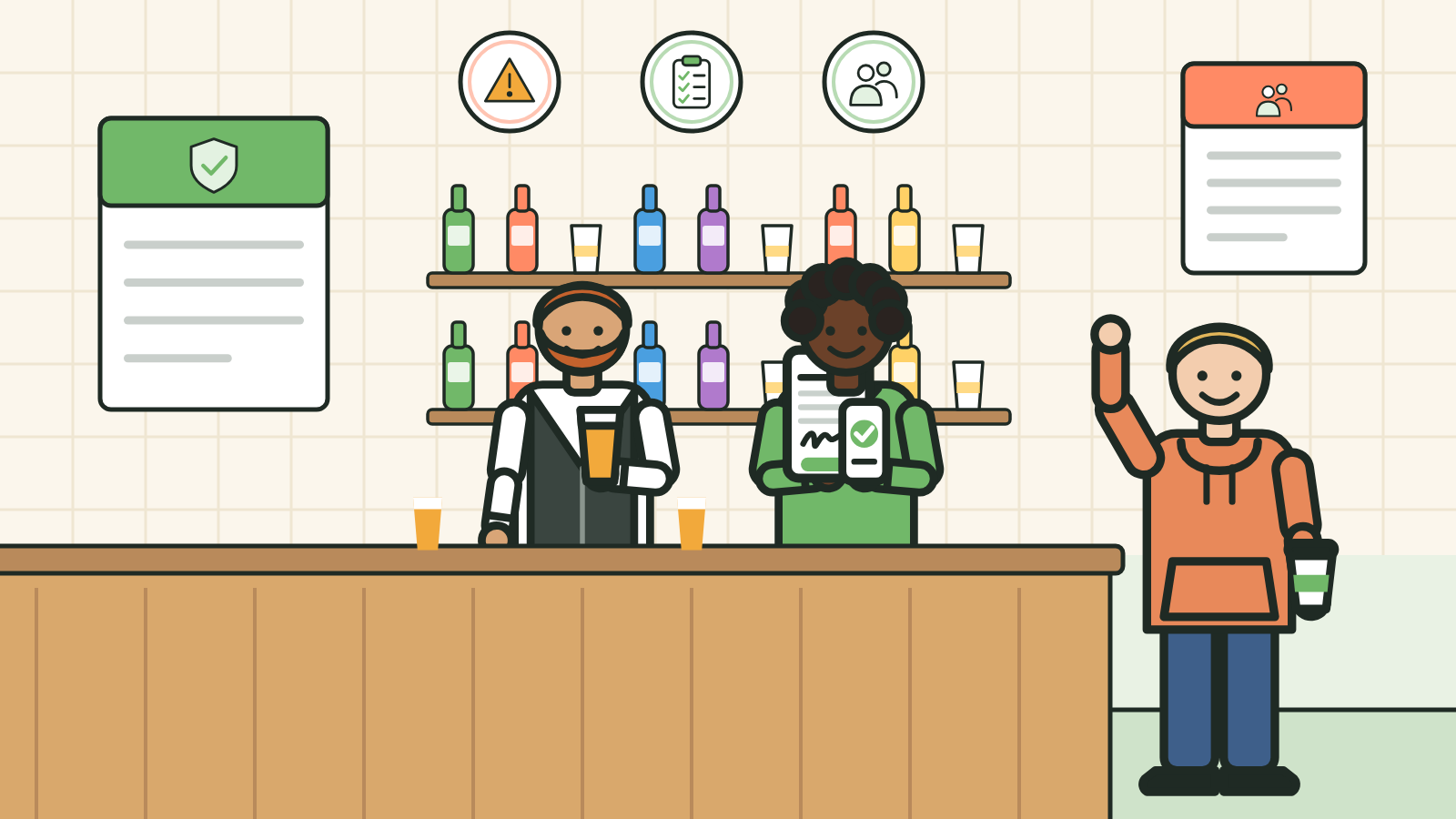
From 30 October 2026, employers must take "all reasonable steps" to prevent sexual harassment of their staff, up from "reasonable steps". On the same day you become liable if a customer harasses one of your team, unless you took all reasonable steps to prevent it. Both changes come from the Employment Rights Act 2025, and the date is set in regulations made on 1 October 2026.
What starts on 30 October 2026
The Employment Rights Act 2025 (Commencement No. 6) Regulations 2026 bring these parts of the Act into force on 30 October 2026:
- section 20: employers must take all reasonable steps to prevent sexual harassment
- section 21: employers must not permit harassment of their staff by third parties
- section 22: a power for the government to set out, in later regulations, which steps count as reasonable
These three are the ones that land on a bar, a kitchen floor or a café counter. The same regulations also bring in some trade union changes, covered further down, and a measure that doesn't affect hospitality.
GOV.UK's timeline lists the harassment and trade union measures under "Measures that will take effect on 30 October 2026", and Acas gives the same date.
"Reasonable steps" becomes "all reasonable steps"
This isn't a brand new duty. Since 26 October 2024, section 40A of the Equality Act 2010 has said an employer "must take reasonable steps to prevent sexual harassment of employees". Section 20 of the new Act adds one word: "all".
Acas explains the difference. Employers "might have previously chosen to take some reasonable steps", and they'll now be expected to take all of them. It means taking every step that's reasonable for your business rather than a few, and putting the weight on preventing harassment, not only reacting after it happens.
What counts as reasonable depends on your business: Acas mentions its size, the sector and the kind of work your staff do. A 20-cover café with two staff on a weekday isn't expected to run like a hotel group. A late bar with door staff and a dance floor will be expected to do more than a breakfast café.
If a tribunal finds a worker was sexually harassed and you broke the 40A duty, it can already add up to 25% to the compensation. The EHRC can also investigate an employer and take enforcement action under the Equality Act 2006.
Customers count: third-party harassment
Section 21 adds a new subsection to the Equality Act: an employer must not permit a third party to harass one of its employees. You "permit" it only if the third party harasses your employee in the course of their work and you "failed to take all reasonable steps" to prevent it.
It covers harassment generally, not only sexual harassment. In Acas's own example, customers threaten two new staff and use racist terms towards one of them. The owner tells them it's "all part of the job". Acas says it's "very unlikely" that owner has taken all reasonable steps.
A third party is anyone your staff deal with through work who doesn't work for you. Acas lists customers, clients, contractors and tradespeople, people at events and other members of the public. For a pub or restaurant that means the table of eight on a birthday, the regular at the end of the bar, the delivery driver at the back door and the person who rings to complain.
What that looks like on a Friday night
Say Kate Smith runs a pub with a small kitchen. A regular keeps commenting on how one of the bar staff looks, and leans over the bar to do it. The bar staff have mentioned it to each other, but nobody's told Kate, because nobody's sure who they're meant to tell. Nobody's written anything down.
From 30 October, a tribunal would look past this one regular and ask whether Kate had taken all reasonable steps to stop this kind of thing happening at all.
What "all reasonable steps" can look like in hospitality
Acas suggests steps for third-party harassment, and they translate easily to a bar or a kitchen:
- assess the risk regularly, and act to reduce it
- record incidents and what you did about them
- have a policy that says how third-party harassment is dealt with
- train staff, for example in staff safety and de-escalation
- tell customers the consequences of harassing staff, for example on posters or in emails
For sexual harassment, Acas adds giving staff more than one way to report it and training that suits your business.
For higher-risk places, Acas says steps "are more likely to include" enough staff on (for example, security), safety equipment such as personal alarms, and cameras. Its example of an employer getting it right is a nightclub. The owner listens to the team, then brings in extra door supervisors, an alarm system, cameras, code words, safe areas and incident tracking. Problems still come up, but they're quickly reviewed, and Acas says that owner has likely taken all reasonable steps.
Start with the risk assessment
The EHRC's guidance lists factors to look at when you assess the risk of harassment. Several of them describe a normal week in hospitality: lone and night working, "the presence of alcohol", customer-facing duties, and job insecurity, "for example, use of zero hours contracts".
That last one matters here. The ONS estimates that about 337,000 people on zero-hours contracts work in accommodation and food, more than a quarter of everyone on one in the UK (April to June 2026).
So a useful risk assessment for a small site asks plain questions. Who closes up on their own? Which shifts are busiest with drink? Who's young or new? Where can't the rest of the team see what's happening, like the cellar, the back yard or the far end of the terrace? Which customers have caused problems before?
Write down what you decided not to do
Acas says taking all reasonable steps means "doing what is possible with the available resources", and some steps won't be possible for everyone. It suggests you record why you decided a step wasn't reasonable. If a two-person café decides door staff aren't proportionate, a line saying so, and why, is worth having.
Make it easy to tell someone
In a kitchen the head chef is often the person staff would have to report to, and sometimes they're the problem. Acas wants more than one route. Name a second person, and make sure a new starter knows both names in their first week, not after something has happened.
Tell customers
A notice by the bar or the till that says staff are to be treated with respect, and what happens if they aren't, is one of the steps Acas names. A free notice for customers and a sign maker are in the free resources section of this site. If you're thinking about asking someone to leave, the post on whether a pub, café or restaurant can refuse service covers what the law allows.
The government can name the steps later
Section 22 gives ministers a power to make regulations that say which steps are to be regarded as reasonable. The Act says they could cover assessments, published plans or policies, how harassment is reported and how complaints are handled (section 22).
That power starts on 30 October, but the steps themselves don't exist yet. GOV.UK says the regulations will come "at a later date", and that they'll "complement, not replace" the wider duty to take all reasonable steps. So there's no official checklist to tick off on 30 October. The test is still what's reasonable for your business.
The trade union changes on the same day
GOV.UK lists four trade union measures for 30 October 2026: a stronger right for unions to access workplaces, reforms to the recognition and derecognition process, new rights and protections for union representatives, and wider protection against detriment for taking industrial action. If your staff aren't in a union, little changes in your day-to-day. If a union asks to talk to your team, the rules on access are the part to read up on.
The wider picture
30 October is one date in a longer list. Statutory sick pay from the first day of sickness started in April 2026, most tribunal claims have had a 6-month time limit since 1 October 2026, and unfair dismissal rights after 6 months are due from 1 January 2027. The post on what the Employment Rights Act 2025 means for restaurants, cafés and pubs goes through the dates.
This post is general information rather than legal advice, and Acas has free guidance and a helpline for your own situation.
Where managero fits
managero HR & Safety is built around the duty: a risk assessment for your sites that includes customers, a policy with a reporting route, a record of which staff have read it and been briefed, and a tick for the customer notice going up, with who did it and when. It keeps a dated record of the steps you've taken. Which steps are reasonable for your business is for you to decide.
Common questions
- What is third-party harassment in the workplace?
- It's harassment of one of your staff by someone who doesn't work for you, such as a customer, a supplier, a contractor or a member of the public. From 30 October 2026 the Equality Act says an employer must not permit it. You're liable if a third party harasses someone you employ in the course of their work and you failed to take all reasonable steps to prevent it.
- Which actions can actively prevent harassment in the workplace?
- Acas lists assessing the risk regularly, recording incidents and what you did, having a policy, training staff in safety and de-escalation, and telling customers the consequences of harassing staff, for example on posters. For sexual harassment it adds more than one way to report and training suited to your business. Higher-risk venues may need door staff, alarms or cameras.
- Can you provide some real-world examples of harassment cases in the workplace?
- Acas gives two. A convenience store owner tells new staff that threats and racist abuse from customers are part of the job: very unlikely to be all reasonable steps. A nightclub owner listens to staff, then adds door supervisors, an alarm, cameras, code words, safe areas and incident tracking: likely to be all reasonable steps, even though problems still happen.
- What are the changes being made to unfair dismissal payouts in the UK?
- That change isn't part of the 30 October package. From 1 January 2027, according to Acas and GOV.UK, employees can claim unfair dismissal after 6 months in a job instead of 2 years, and the limit on unfair dismissal compensation is removed. GOV.UK says the shorter qualifying period applies to dismissals from 1 January 2027.
Sources
- The Employment Rights Act 2025 (Commencement No. 6 and Transitional and Saving Provisions) Regulations 2026, SI 2026/1065, reg 3 (made 1 October 2026)
- Employment Rights Act 2025, s.20
- Employment Rights Act 2025, s.21 (inserts Equality Act s.40(1A) to (1C))
- Employment Rights Act 2025, s.22 (inserts Equality Act s.40B)
- Equality Act 2010, s.40A (in force 26 October 2024)
- Equality Act 2010, s.124A (compensation uplift up to 25%)
- GOV.UK, Plan to Make Work Pay and Employment Rights Act: timeline update (updated 25 September 2026)
- Acas, Employment Rights Act 2025 (last updated 1 October 2026)
- Acas, Sexual harassment: harassment law changes (last updated 26 August 2026)
- Acas, Third party harassment: harassment law changes (last updated 26 August 2026)
- EHRC, Sexual harassment and harassment at work: technical guidance (last updated 26 September 2024), paras 3.36, 3.85, 4.10
- Employment Rights Act 2025, s.59 (trade union access to workplaces)
- Acas, Statutory sick pay (last updated 30 June 2026)
- Acas, Employment tribunal time limits (last updated 1 October 2026)
- ONS, EMP17: people in employment on zero hours contracts (released 18 August 2026), table 6, April to June 2026
More from the blog
-

New employment laws: what they mean for restaurants, cafés and pubs
Sick pay from day one, 6-month claim limits and a stronger harassment duty from 30 October 2026: what the Employment Rights Act 2025 means for hospitality. -
Fridge, freezer and hot holding temperatures: the legal limits for UK food businesses
The legal fridge temperature in England and Wales is 8°C or below, hot food 63°C or above. What the law says, what's guidance, and what to check each day. -
Food hygiene rating scores explained, and what "confidence in management" means
How your food hygiene rating is worked out from three scores, why confidence in management can cap it, and what officers look for in a small kitchen.